Saturday, March 1, 2014

What's My Line?


In the rapid back-and-forth exchange between police chief, shark expert and mayor it’s easy on a first viewing to overlook a niggling inconsistency in the dialogue. Challenged to produce the tooth that is the ‘size of a shot glass’, Brody sheepishly admits that Hooper had dropped it. ‘We had an accident on the way in,’ he adds by way of explanation, only for Hooper to correct him with the line ‘I had an accident.’ Taken at face value, this could be read as a subtle piece of character development: Brody glossing over the details of the ‘accident’ in an attempt to cover for his new-found friend, with Hooper demonstrating that he is man enough to take responsibility for his own actions. However, the truth of it is that these scripted lines refer not to the night time scene we have just witnessed, but to another version of the Ben Gardner boat sequence that was only partially filmed. 


As originally written the discovery of the wreck was to take place in daylight (as it did in the novel), with Hooper, Brody and Meadows on board. The circumstances of the shooting of this scene are given prominence in Carl Gottlieb’s The Jaws Log due to the fact that the screenwriter (who also had landed the part of Amity newspaper man Meadows) fell overboard on the third take. Coincidentally, this moment was caught on camera by a BBC film crew, who were doing a location report with movie critic Iain Johnstone, and the hapless Gottlieb can be seen being hauled ignominiously out of the water on one of the Blu-Ray’s extras. The filming was abandoned and, in one of their many spitballing story conferences, Spielberg suggested that the sequence would be spookier if set at night with only the two principal actors involved. Gottlieb, no doubt anxious to avoid another possible soaking, happily wrote himself out of the scene. What appears in the finished movie was eventually shot on the Universal backlot and the MGM tank, with the noctural environment and the fog effects helping to disguise what would otherwise have been an obvious studio setting.

Saturday, February 22, 2014

Jersey Shore


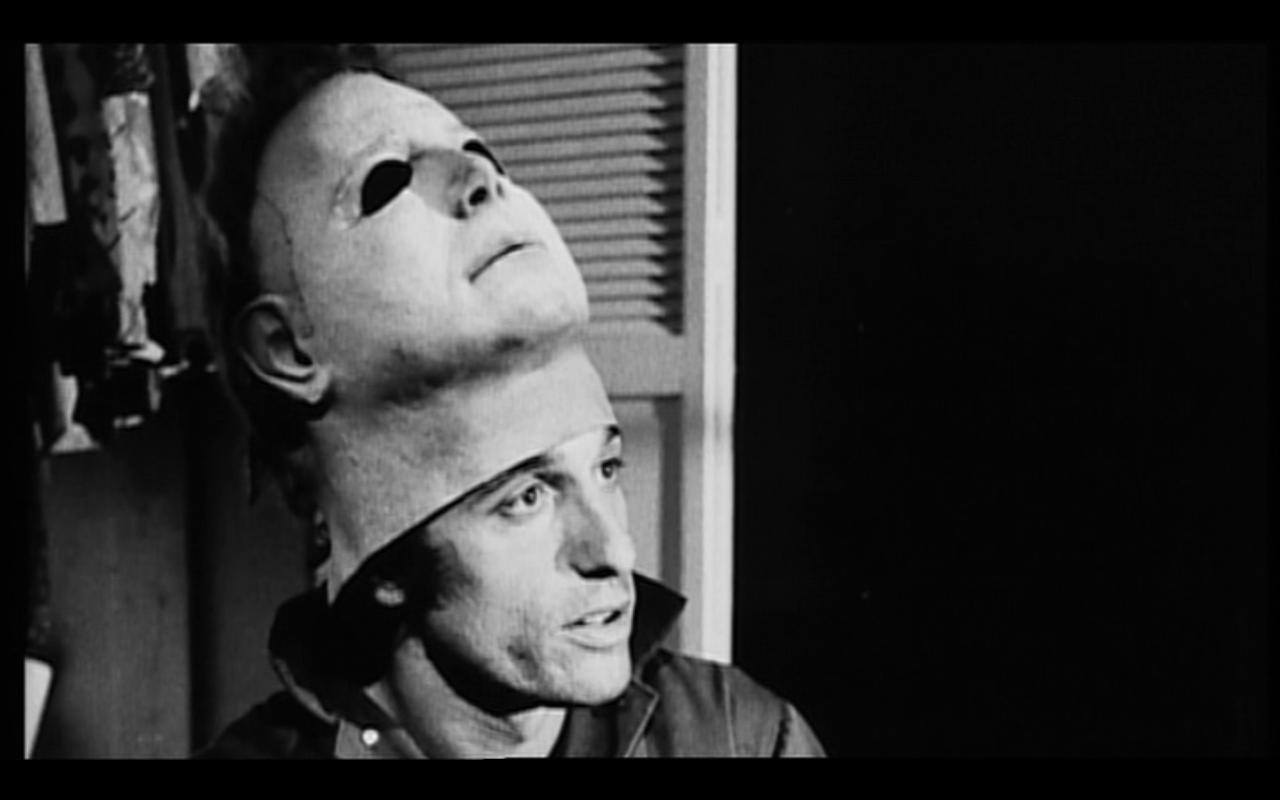
Today anybody with access to the Discovery channel can become a shark expert within a week, but back in 1975 it was felt necessary to educate the audience on some aspects of the fish’s behaviour. In explaining the concept of territoriality to the mayor, Hooper fleetingly references a series of shark attacks that took place off the Jersey Shore between July 1 and July 12, 1916. In another version of Jaws, one can imagine this historical incident being expanded into an Indianapolis-like monologue for Hooper at the Brody’s dinner table. As it is, the events are compressed (and slightly distorted) into one memorable line delivered by Brody (‘Five people chewed up in the surf.’). The full story itself would eventually be told in a 2004 TV movie called 12 Days of Terror, co-written by Tommy Lee Wallace, friend of and longtime collaborator with John Carpenter, and the man behind the mask in Halloween. Although the Jersey Shore attacks are often credited as being the inspiration for the original novel, the fact that the story is widely known today owes much to its brief name-check in the movie, just as Quint’s Indianapolis story has usurped the true historical facts of that incident in many peoples’ minds. In the novel Benchley references the Jersey Shore attacks in journalist Bill Whitman's report in the New York Times (page 58 of the Fawcett paperback edition), citing it as "the only other recorded instance of multiple shark-attack fatalities in the United States in [the 20th] century." 

Friday, December 21, 2012

The Time It Takes To Take The Takes


The scene between Brody, Hooper and Vaughn that plays out against the backdrop of the ocean and the defaced billboard runs – with the exception of a cutaway reaction shot at the end – in one fluid take lasting about three minutes. The technique goes back to Orson Welles’s Citizen Kane and the technical experiments of Alfred Hitchcock in Rope and Under Capricorn, and was also admired and perfected by Stanley Kubrick, whose long tracking shots were one of his signature strokes. In both form (a single unbroken take) and content (a display of denial) the confrontation acts as a companion piece to the earlier ferry scene when Brody is persuaded into accepting the cover story of a boating accident to explain the first shark victim’s death. However, there are key differences that indicate the balance of power has shifted. In the ferry scene, Brody is alone against the local newspaper editor, the coroner and the mayor, all of whom act (and speak) as one. 


On the bluff overlooking the bay, it is now Vaughn who is isolated, hemmed in on both sides by Brody and Hooper, whose overlapping rapid-fire dialogue he finds it frustratingly hard to rebut. Two of the minions who backed him up earlier (Meadows and Hendricks) are too busy in the background supervising the repair of the grafittied billboard to lend support now. Gone too is the mayor’s avuncular tone and persuasive use of language. Caught on the back foot, he is reduced to desperate repetition (‘You don’t have the tooth?’) and evasiveness (‘Sick vandalism … a deliberate mutilation of a public service message.’). The contrast of location is also significant. In the earlier scene, Brody was literally penned up against by the rails of the ferry, just as he was boxed in by the official party line. Now, he moves freely along the top of the bluff, gesticulating expansively towards the community of Amity below.


If for Brody the conversation must have a sense of déjà vu, Hooper is unfamiliar with the Babbitism of small town politics and he begins with a degree of deference, a tone which strains and eventually snaps under the mayor’s persistent denial of what (on the billboard) is literally staring him in the face. Indeed, the scene plays with literal and metaphorical geography: Vaughn turns his back on Brody and Hooper and walks away, just as he metaphorically walks away from the problem. When he gets into his car at the end of the scene a road sign with the words ONE WAY stamped upon it points in the direction he is about to drive off in, indicating that the mayor, like another famous politician, is incapable of reversing a decision and making a U-turn.

Thursday, December 20, 2012

Big Head


The shot of Hooper silhouetted against the light as he swims underwater towards Ben Gardner’s boat recalls the shark POV of Chrissie in the movie’s opening scene and the increasingly threatening music encourages the audience to anticipate another attack. In fact, the brief music cue that underscores the scene (called ‘Night Search’ on the original soundtrack recording) is a classic example of how film music is often required to change both in mood and tempo from moment to moment, expressing contrasting emotions within a few bars. High notes on the piano and shuddering chords convey the eerie atmosphere of the ocean at night and, as Hooper approaches the ravaged hull, a soft ostinato plays on the cello, reminding us that there is a shark somewhere in the water. 


Hooper discovers a hole below the waterline that recalls the image of the fishing boat in the book that frightened Ellen (that boat also had two fishermen in it). The ruptured planking also serves as a visual echo of the broken fence motif that runs through the early scenes of the picture. Nature, red in tooth if not in claw, is breaking through the barriers that man has constructed to mark out his territory. Hooper casts a nervous glance behind him, playing the beam of his torch over the murky water, before closing in on the hull to prise a white triangular tooth from the wood. We’re shown a close up of the tooth in his hand before there is a cut to a shot looking over Hooper’s shoulder directly into the dark hole in the side of the boat. Suddenly out of the darkness there lunges a white object, which, in the split second before it resolves itself into the shape of Ben Gardner’s severed head, could be the jaws of the shark. The visual shock is ramped up by an aural one as the shrill sound of high flutes and then shrieking violins (much like the ones Bernard Herrmann used for the Psycho shower scene) scrape down the soundtrack like Quint’s fingernails on a chalkboard. 


The big head of Ben Gardner is given enough screen time in close-up for us to register the gory details (the pale skin and the rictus scream, the one wide staring eye and the other wormy socket, the hair rippling like kelp) before there is a cut to Hooper’s reaction, his own startled face behind the mask mirroring the shark victim’s own disbelieving stare. Hooper’s screams – unlike those of the audience – are inaudible underwater, but expressed by the exhalation of his final gasps of air. He kicks towards the surface, abandoning the precious evidence of the tooth together with his knife and his torch. When he breaks the surface, the water all around him is a sulphurous yellow. He is caught in Brody’s spotlight as he swims to the boat, and when he grasps the ladder he can do nothing but look up into the camera, gasping both for air and for words. It’s likely that this coda was lengthened by several beats to allow the audience to settle down after the big shock of the dead fisherman’s head rolling into their laps. The next scene contains a lot of talky exposition, which could easily have been lost under the audience chatter that often comes in the wake of a big communal scare.

The story behind the movie’s biggest shock moment is part of Jaws legend. As originally filmed, Hooper discovered the remains of Ben Gardner by shining his light into the interior of the hull, and this was how the scene played out in early preview screenings. In fact, the reaction shot of Hooper (which was not reshot) is partially framed by the shattered wood as if the camera were inside the hull, which makes more visual sense in terms of the original concept. Spielberg was convinced, however, that he could get a louder scream out of the audience by making something jump out at them like in a Fifties 3-D horror movie. 

Unable to persuade the studio to back his idea, the director stumped up three thousand dollars of his own money to pay the art department to build a mock-up section of the boat hull and then with the assistance of a stunt double diver, editor Verna Fields’s swimming pool and some home grown special effects (Carnation milk and shredded tinfoil to give the water a murky look), he shot nine different versions of the shock reveal. He had these spliced into the scene and played each one to the post production crew, who by now had run the film so many times that they were inured to its scares. The version they reacted to was the one in which there is an infintessimal pause before the fisherman pops out like a head in a phantasmagoria, and Spielberg, always trusting his instincts, had it cut into the movie. He was so pleased with the effect it had on audiences - which he measured by how high their popcorn flew into the air - that he would make special trips to showings of the picture and sneak in at the back just to watch the reaction to that moment. 

Spielberg was clearly monitoring the picture closely during its previews for he noted that by ramping up the shock quotient in this scene, he had sacrificed some of the scare value in the movie’s other ‘big head’ moment - when the shark rears up out of the chum slick at the Orca’s stern. This scene now got less of a reaction than it had before, and the director rationalised this as the result of a greater sense of caution on the audience’s behalf. This may have been the case, but surely the Ben Gardner scene, with its atmospheric underscore and horror movie trappings, was always going to get a bigger scream by virtue of the fact that it had wound the audience up into a heightened sense of expectation before jumping out at them at saying ‘Boo!’ The shark’s sudden appearance comes – literally – out of the blue, and, as Hitchcock always observed, suspense is a much more powerful promoter of emotion than surprise.

Sunday, November 25, 2012

Turn On Your God Light


A low angle shot of the boat in the fog cuts to a close-up of the fish finder – a grey box with a circle of compass headings on it – as it gives out a beeping sound, an echo of the eerie underwater sonar effect that played under the opening of the movie’s credits. Hooper’s first reaction is to dismiss the warning (‘It’s probably just a school of mackerel all flocked together.’), but the machine’s insistent beeping (which is not unlike the electronic warbling of R2D2) prompts him to check the boat’s radar. There is a cut to a close-up of him peering into the rubber visor (the green glow of which has been visible in the foreground) and then the camera tilts up to frame both Hooper and Brody in a tight shot, their faces lit spookily from below. 


As Hooper gives a directional heading (‘About a hundred yards south south-west.’), music underscores the moment with an eerie effect and continues to play as there is a cut to a shot of the boat moving across the screen. Hooper swivels the beam of the searchlight like an apprentice Jedi wielding his first light sabre, and it picks up a barrel floating on the surface of the dark water. There is another cut to a shot of a half-submerged boat in the foreground of the frame and then a shot of the same boat seen from the prow of Hooper’s craft as it approaches. Another cut to a low-angled shot of Brody, who has now taken command of the searchlight, its beam illuminating his face in a quasi-religious glow. The music on the soundtrack swells with an emotion that is closer to wonder than fear as another shot shows the partially sunken boat with the light now playing through its broken windows. 
The presence of the fog gives the slants of light an almost physical quality in an effect that Spielberg would return to again and again in later movies, and which became known as his trademark ‘GodLight’. A dialogue exchange (clearly dubbed in post production) establishes Hooper’s plan to check out the hull of the boat, and as he goes down into the cabin to change into his wet suit, he instructs Brody to ‘hit the lights.’ As if on cue, there is a cut to a slow tracking shot running the length of the abandoned ship; its shattered glass, twisted netting and cork floats, and the ravaged side are all seen in sharp silhouette as the light shines directly into the camera, producing a brief white-out of lens flare. At the moment the camera glides past what looks like a bite in the side of the boat, the music swells again, and then there is a cut to Brody peering nervously from behind a hand-held spotlight as Hooper affixes a ladder aft.
Given all that Hooper has been telling us about the habits of this particular Great White, his decision to get into the water seems at best foolhardy, at worst plain stupid. Antonia Quirke in her decidedly quirky reading of Jaws for the BFI Modern Classics series calls this the film’s ‘lone clumsy moment,’ but we the audience recognise that it’s genre convention rather than scientific enquiry that is providing Hooper with his motivation. He’s even obliged to calm Brody with a stock phrase (‘Don’t worry, Martin. Nothing’s going to happen.’) as on the soundtrack the trembling strings in a low register signal the exact opposite.


As Hooper swivels over onto the stern and drops into the ocean, there is a cut to an overhead shot of the boat on the water. The lights illuminating its underside are a sickly yellow and, along with the yellow torch that Hooper has taken with him, here is another example of the colour acting as an indicator of imminent danger. Glowing from below and from its sides, Hooper’s boat has morphed into one of the extra-terrestrial crafts that will swoop and buzz across the screen in Close Encounters Of The Third Kind. The stylized lighting may in part derive from the fact that the scene was clearly shot in a studio tank (the water is too calm to be the real ocean), and the controlled conditions must have given the director more opportunity to play with his effects, perhaps already with one eye on his next movie.

Saturday, October 6, 2012

I've Got Plenty Of Jackets

Brody looks over his shoulder at the bank of flickering TV monitors and, perhaps wishing he were back in the safety of his den, asks if they can pick up the late show - a joke that cues up Hooper's description of the equipment ('It's a closed circuit TV system. I have underwater cameras fore and aft.'). It also provides an unstated reason for why they have come out after dark into the stretch where the shark has been feeding: perhaps it's to capture photographic evidence to show to the mayor. However, as the movie's sequel will show, even that would probably not be enough for a man in denial like Larry Vaughn.


Brody clambers up onto the bridge to join Hooper and engage in some light-hearted banter during which we learn that the latter comes from good stock. Unlike the version of Hooper in the novel, Dreyfuss shows the character wearing his wealth and privilege as lightly as his blue collar denim jacket. Indeed, Hooper's wardrobe throughout the movie (docker's woolcap, the aforementioned denim, his off-the-peg jacket and woollen tie, his grey sweatshirt) seems determinedly downmarket. His only concession to the Seventies penchant for pastel is his pale pink undershirt seen on board the Orca.

Most of the wardrobe attention in Jaws is directed at Larry Vaughn's outrageous jackets and the more sober sartorial choices of the three main characters tend to go unnoticed. There's no doubt some intended colour coding at work: Brody in his sandy-coloured uniform (subliminally linking him to the land), both Hooper and Quint mostly in blue (associating them with the water). It's unlikely, however, that Brody's choice of black for the shark hunt is a signifier of death, or a deliberate yin to the Great White's yang, but it is effective in setting him apart from the two other more experienced sailors.


Friday, September 28, 2012

Bigger Boat

The next scene opens with a shot of the ocean at night, its surface wreathed in shifting banks of milky fog. A sleek white cruiser glides into the frame from the right, its motor chugging. The expensive-looking craft is a much bigger boat than the one Hooper arrived at Amity dock in. That more modest craft is seen clearly only in the deleted scene of his approach, a shot which was abandoned when Dreyfuss failed to master the basic seamanship required to guide it into the harbour.


An overhead shot of the rear deck shows Brody wearing an orange life jacket and clutching Hooper's second bottle of wine, pacing nervously as he gives a slightly slurred explanation of why he moved to Amity. His description of New York ('Violence, rip-off, muggings. Kids can't leave the house - you've got to walk them to school') would be familiar to the movie's contemporary audience from pictures like Klute, The French Connection and The Seven-Ups, all three of which featured performances from Scheider.

Brody's tipsy declaration that 'in Amity one man can make a difference' is undercut as a declaration of heroic principles by Hooper's response ('No kidding. Do you want a pretzel?'). Like the later example of Hooper crushing a Styrofoam cup in a mock display of machismo, it's an example of what Pauline Kael saw as Spielberg's ability to 'set up bare-chested heroism as a joke and score off it all through the movie.' By the end of the picture, when the sheriff is the last man standing (or leaning), the ironic jabs at heroism have been jettisoned in favour of a classic one-on-one showdown.