Saturday, June 9, 2012

A Boy's Life

The dock scene ends with a shot of Hooper looking on with an expression of concern as a humiliated Brody walks away from the dock. This cuts to the next scene, which takes place in the Brody's dining room. The right of the frame is dominated by an old-fashioned walnut sideboard with a set of azure napkins folded on one of its shelves, and on the left is the open doorway to the kitchen with its pale mustard fixtures. These two colours - yellow and blue - will provide the visual palette for the movie's final act at sea.

Ellen Brody, dressed in a kind of half-mourning of a black polo neck sweater and white bell-bottoms, comes through the doorway. As she walks to the table her gaze is directed off camera to the left and just before she bends down to clear away some plates she purses her lips into something that is not quite a smile - an expression that acknowledges the fact that her husband has left his meal uneaten. She gives one more meaningful look off screen and as she returns to the kitchen the camera pulls back to show Brody in profile, his bowed head resting on his supporting fist. Also in the expanded frame on the right is young Sean Brody, who has adopted the same pose as his dad. As Brody reaches out for a tall glass of what looks like scotch on the rocks, Sean takes a drink of his milk. When the father folds his hands together, the son does the same. In the background, slightly out of focus, Ellen returns with a cup of tea and leans against the door frame.


Brody covers his face with his hands in a gesture of shame and as he pulls his palms downwards, the camera cuts to a low angled shot to give us a view of his face as seen from behind the little boy's head. Out of the corner of his eye, the father notices his son's shadow play and playfully moves the fingers of his clasped hands, and then makes a face by baring his teeth - like a shark about to attack. Sean, who has lost his front milk teeth, responds with a gummy smile and makes his hands into claws. Brody leans foward and asks his son for a kiss, which he receives on his right cheek as a counter balance to the slap Mrs Kintner delivered to his left.

The sequence is underscored with a delicate nursery-rhyme-like melody played on harp, piano and vibraphone, and in the manner in which it brings a lump to the throat the scene can be rightly called Spielbergian. The use of shared body language to establish connections between characters is something that the director will return to in later films (Short Round and Indiana Jones in Indiana Jones and the Temple of Doom, or Elliott and E.T in, er, E.T), and the use of carefully choreographed business within a single shot is one of his signature techniques. Scenes around the family dinner table will also recur in later Spielberg movies, although they are more often than not moments of discord rather than harmony.

Monday, May 21, 2012

The Woman in Black

Brody's eager introduction of Hooper to Vaughn is only cursorily acknowledged by the two men. The mayor continues working the crowd, pressing the flesh of Amity voters, while the fish expert - fixated by the bite radius issue - draws the police chief to one side. His line of argument draws on the language of risk and gambling ('...the chances these bozos got the exact shark ...' '...it's a hundred to one') in much the same way that the mayor and the selectmen did when they argued for keeping the beaches open in chapter nine of the novel. It's the precise phrase about the odds that attracts Larry Vaughn's attention and draws him into the conversation. Whilst Brody's initial reaction of denial is quickly overcome in the face of facts ('Maybe the only way to confirm it'), the mayor refuses to back down. Just as he got Brody to agree to amend his report with a combination of friendly persuasion and bullying, he seeks to contain the situation with an initial appeal for solidarity ('Now, look, fellahs, let's be reasonable') and then follows it up with an uglier line of argument ('I am not going to stand here ... and see that little Kintner boy spill out over the dock').


At the mention of the second victim's name, Vaughn's narrow-eyed stare is distracted by something off screen and there is a cut to the boy's mother approaching the dock. The movie's subliminal colour for danger is evident on the right of the frame in the form of the yellow road blocks and on the left by a fisherman in bright oilskin dungarees. As the camera tracks backwards the woman in the yellow sweater and hairband glimpsed earlier amongst the crowd comes into view. Spielberg cuts to a dramatic close up of the grieving mother's profile as she comes face to face with Brody. There is a certain theatricality to the scene: the measured approach of the woman in weeds and the dramatic gesture of the slap, which is followed by an accusation that in its repetition of the phrases you knew and my boy has a certain incantatory ton to it - elements that would not be out of place in a Greek tragedy.

A low-angled wide shot of the dock presents a tableau of Hooper, Vaughn and Brody against a backdrop of the chastened crowd and the crucified fish. As the chief walks away, mournful horns on the soundtrack signal the shift from the celebratory mood of the group with which the scene began to the tortured introspection of the main protagonist. The mayor once again takes control of the situation. He refers to the dead shark as 'an ugly sonofabitch', an epithet which Brody will use (but not complete) when he fires the fatal shot that blows up the air tank. Vaughn gives instructions for two fishermen to dump the carcass in the sea the following day, which serves to set up the upcoming scene where Brody and Hooper must perform their half-assed autopsy under the cover of night.

Monday, May 14, 2012

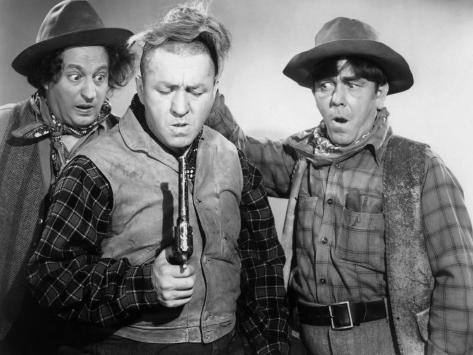
The Three Stooges


The three local fishermen who crowd around the dead shark's gaping maw have the appearance of a knockabout comedy act. There's the bulky curly-haired one in the camouflage jacket with the whiny voice, the plump wise-cracking one with the mustard-coloured pork pie hat, yellow shirt and blood-stained light blue jacket, and the narrow-eyed creepy-looking thin one dressed in grey. Creepy Guy taps the snout of the dead fish with a pen and wrongly calls it a mako (which he also mispronounces, shortening the vowel and putting the stress on the second syllable) whilst Pork Pie Hat peers into the gullet and makes a joke that references both Seventies mainstream porn and politics. Hooper is revealed as a passer-by in yellow crosses the frame from right to left, and he identifies the catch as a tiger shark, whereupon Camouflage Jacket turns and stretches out the word what? in a high camp voice. As Mayor Vaughn approaches, shaking hands as if he were running for office, Hooper, who has begun propounding his bite radius theory, is hemmed in by the locals. Creepy Guy stands behind him and in a strangely unsettling moment blows on the back of his neck. In a movement that acts as a counterpoint to Vaughn's eager advance, Hooper retreats across the frame from right to left as the fishermen, not wanting to be robbed of their moment of glory, shout down any suggestion that they've caught the wrong shark. Hooper himself seems to be doing a bit of back-pedalling by finessing his words - 'I'm not saying it's not the shark. I am saying that it may not be the shark. It's just a slight difference in semantics, but I don't want to get beaten up for it.' Hooper will revert to more semantic distinctions in the following dinner table scene when he tells Ellen Brody 'They caught a shark. Not the shark.'

Sunday, May 13, 2012

Ben


Larry Vaughn's second appearance sees him sporting another summer jacket in pastel stripes that is reminiscent of the pattern of a deck chair. As he approaches the dock he asks Brody, 'Ben getting plenty of pictures for the paper?', which is either a reference to the uncredited Amity Gazette photographer or a fluffed line reading in reference to Harry Meadows. Or perhaps the sight of Richard Dreyfuss (who shared a few seconds of screen time with Murray Hamilton in The Graduate) acted as a subconscious trigger in the actor's memory and made him recall another Benjamin. Or perhaps he meant it as a sly reference to the rat that was the subject of a 1972 horror movie and a Michael Jackson hit. Or maybe he was chanelling George Lucas, who in 1974 was still going through draft after draft of his proposed space movie and working out the names for the characters. I guess we'll never know.

You Wouldn't Hit A Guy With Glasses, Would You?

Harry Meadows gets his picture for the paper and as the group of fishermen break up again Brody spies Larry Vaughn approaching the dock. The camera pans with the chief from left to right as he runs to share the good news with the mayor, and, as he walks, he puts on his glasses, which - perhaps in a moment of vanity - he had removed to have his photograph taken. We can assume that the character of Brody suffers from long-sightedness: he needs glasses to read the shark books (and to provide a reflective surface for the images to be projected onto), but he is able to draw a bead on the air tank in the shark's mouth without them.


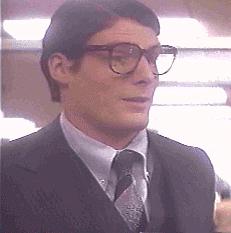
Putting your male protagonist in glasses is one way of signalling that he's unlikely material as a hero, and perhaps the most knowing use of this trope is the thick-framed pair of spectacles worn as a disguise by Clark Kent. Glasses may also be used to suggest that the character is an intellectual or a scientist. Roy Scheider told Nigel Andrews he was initially unhappy with some of the decisions that were being made about his character. 'When the campaign to soften my part began, when they started to encourage me to make changes - wearing glasses, bumping into things and falling down - I was worried. [...] I resisted Steven at first because I felt he was pulling Brody back into wimpdom - which he was doing. He didn't want to give the audience one damn clue that it was remotely possible for me to kill the shark.'

Brody finally loses his glasses when a barrel strikes him on the shoulder as the shark threatens to pull out the Orca's stern cleats, and he has to face the monster - literally eyeball to eyeball - without them. There are, of course, practical reasons for getting rid of Brody's eyewear before the final confrontation - having to wipe his lenses before firing off a shot would have diminished the heroic nature of his final stand - but symbolically the moment is there to mark the character's transformation from observer to man of action. Interestingly, Hooper never loses his glasses, and, in fact, has to be reminded to remove them before he descends in the shark cage - for him they are a badge of his scientific discipline.


Monday, April 23, 2012

One Row Kneeling, One Row Standing


The next scene opens with a close up of a dead shark on the Amity dock. The camera tracks slowly back and a hook in the fish's snout lifts the jaws open to reveal a bloodied gullet. As it is hoisted into the air to the jeers of the crowd, we see that the animal - like a martyr - has arrows in its flank. It's unlikely, however, that any Christian symbolism was intended here, and if there is any reference it is that of the villagers persecuting the monster in an old Universal horror picture.

Fittingly for a moment of -albeit false - celebration, the colour palette is bright and vivid. Newspaper editor Harry Meadows, who is vainly trying to organise a group photograph, is wearing a rich burgundy jacket and deep red slacks. There's a man in an orange life jacket, a man in a pale green sweater and to the far right of the frame a woman in a neon pink jacket. As the camera pans with Meadows and his note-taking assistant (in a blue jacket and tartan trousers), a woman is seen at the edge of the crowd wearing a yellow sweater with matching blouse and hairband - a subliminal message that the danger has not yet passed. Towards the end of the scene when Mrs Kintner confronts Brody yellow becomes the dominant background colour.

Brody and Hooper walk into shot and the camera tilts upwards to catch the chief's smile of relief as he pauses to look at the dead fish. This is contrasted with a cut to Hooper, framed by the wrinkled carcass of the shark, frowning. As he turns away out of shot to the right his place is taken by a grinning Brody, who surveys the fish and asks, 'Ben Gardner get this?' This is, in fact, the first mention of the character's name and the audience has no way of connecting it to the bulky man in the camouflage jacket who led the posse of fisherman out on the hunt.


As Brody congratulates the men who caught the fish Hooper goes about checking the bite radius with a tape measure he has conveniently to hand. There is a cut to our first sighting of the Orca as it passes the dock with Quint alone at the wheel. A US yacht ensign flag flies from the stern of a berthed boat in the foreground, and in the background, on the other side of the channel, is a white lighthouse, like the one that will play an explosive part in the next Peter Benchley film adaptation. There is another cut to more shots of the crowd milling about and Harry Meadows, seen through a forest of fishing rods, finally begins to bring some order to the scene, telling the men in the first row to kneel down 'just like in high school.'. We then cut back to a closer shot of Quint sailing past. He touches the tip of his cap and gives a brief cackle of derision as he surveys the circus. Hooper is told to move out of the shot and the photograph - which will later appear blown up to the size of a billboard on the town beach front - is finally taken.

Saturday, April 14, 2012

Probable Boating Accident

The next scene opens with a shot of the interior of the local morgue, or at least whatever passes for such a facility in Amity. Above a stainless steel surface is a shelf of artfully arranged bottles and to the right of the frame in a corner of the room is a cold storage unit. Apart from the bottles - some of which are of coloured glass, some of which contain liquids of blue or pale amber - the overall scheme is antiseptically white. On the far left of the frame, positioned on the edge of the work surface, is a plastic specimen bottle half full of a red liquid, which provides a visual echo of the crimson water in the previous scene.

Brody and Hooper are followed into the room by the medical examiner, who goes to the cold storage unit and retrieves a plastic bowl covered with a cloth. For some reason, despite the second attack on the boy and the story of the two fishermen's unsuccessful attempt to catch the shark, the authorities still seem to be sticking to their story of Chrissie Watkins being the victim of a boating accident. As Brody hands over the amended report he draws attention to the cause of death, which Hooper enunciates ('Probable boating accident') in a tone of disbelief. The chief averts his gaze and mutters a simple affirmative that essentially acknowledges his own culpability in the cover up. He moves to the window and tosses a wet oilskin jacket to the floor. It's an item of wardrobe that may have come from an earlier cut scene for its presence - like the towel the chief wears over his shoulder in two early scenes - is never explained. It does, however, provide a convenient visual metaphor that marks Brody's transition from a member of the group trying to cover up the threat to the one man who can make a difference. As he tosses the jacket onto the floor, he wipes his palms with a degree of distaste as if he is washing his hands of any previous involvement in the small town conspiracy.


Hooper draws back the cloth from the plastic bowl and gasps. He is wearing transparent surgical gloves and is kitted out with a microphone and a cassette player that allows him to record a commentary in typical autopsy-speak ('The right arm has been severed above the elbow with massive tissue loss in the upper musculature.'). Dreyfuss speaks the lines - which are interspersed with a polite request for and an acknowledgement of a drink of water - with an edgy rhythm, as if all the while he is fighting a gag reflex. He manages to reprimand both the medical examiner ('This was no boat accident.') and the chief ('Did you notify the coastguard about this?') with a superbly modulated delivery. The former phrase has passed into movie quote legend and was even referenced by Dreyfuss himself in Stakeout.

The framing of Brody against the window recalls the earlier images of the chief in the town hall meeting. As if it were not enough to have his professional integrity questioned, he is chastised when he attempts to light up a cigarette. Hooper moves around to the other side of the table on which the remains have been set and lifts the severed arm into view. This no doubt is the same limb that Brody found on the beach and it will later be echoed by the shot of the estuary victim's leg spiralling to the sea bed. As Hooper lifts up the marbled arm, he utters the phrase 'This is what happens', which - like the insert shot itself - remains something of a non-sequitur in the scene.


Hooper now segues from mortuary attendant-speak to shark expert-speak, announcing that the wounds indicate 'the non-frenzy feeding of a large squalus, possibly longimanus or isurus glaucus.' There is no mention at this stage of carcharodon carcharias, although Hooper will later use the Latin phrase when trying to convince Larry Vaughn of the threat to the community. As Hooper talks with an increasing sense of anger and even contempt, there is a shot of the medical examiner crossing his arms and lowering his gaze, in an echo of the defensive posture he adopted on the ferry. This is mirrored by a medium close up of Brody, whose gaze is directed to his right towards Hooper. When Hooper says the word 'propeller' Brody's eyes shift towards the examiner and his mouth turns up slightly on the left as a final acknowledgement that the truth has come out.


Hooper's litany of potential causes of the girl's death ('It wasn't any propeller. It wasn't a coral reef. And it wasn't Jack the Ripper.') move from the plausible to the unlikely to the absurd. There is a shot of his profile as he bends down to bathe his face and when he turns to the camera, his final line ('It was a shark.') provides an aural match cut to the next scene, just as the close up of his face provides a visual one.